Some students leave the admissions cycle feeling like their results didn match their academic ability. Others get to campus and realize pretty quickly that the intellectual environment isn quite what they hoped for. Maybe the coursework isn rigorous enough. Maybe the research opportunities are limited. Maybe the culture just doesn feel right. That where transferring comes in.
Whatever the reason, you™re far from alone. Roughly 13% of college students transfer schools each year, which works out to over a million students making a move annually. At TKG, we™ve helped a lot of students through this process. Several of our counselors actually transferred during college themselves, so we understand both the strategy involved and the weird emotional headspace that comes with wanting a do-over.
If your target is MIT, though, you need to approach the process with a very clear plan. MIT attracts some of the most academically intense students in the world, and the transfer pool reflects that. The competition will be fierce, but transfers do happen.
Your job is to make sure you™re one of the applicants who impossible to ignore.
MIT Transfer Stats
Let start with the obvious: transferring into MIT is extremely difficult. MIT typically enrolls about two dozen applicants a year. That crazy low! Last cycle had an acceptance rate of 2.4%, or 32 students total.
| Transfer Admission | Applicants | Admitted | Acceptance Rate | Enrolled | Yield Rate |
|---|---|---|---|---|---|
| Men | 864 | 22 | 2.50% | 18 | 81.80% |
| Women | 330 | 8 | 2.40% | 8 | 100% |
| Another Gender | 53 | 1 | 1.80% | 1 | 100% |
| Unknown Gender | 99 | 1 | 1.01% | 1 | 100% |
| Total | 1,346 | 32 | 2.40% | 28 | 87.50% |
So yes, the odds are brutal. But it can happen “ the real question isn whether MIT admits transfers, it who gets in. And in most cases, the answer comes down to how a student performs their freshman year.
Choosing The Right College
Your transfer strategy actually begins before you even start college. Where you enroll in your freshman year determines the academic record, experiences, and opportunities that will eventually form your transfer application. Ideally, you™re choosing between several colleges. If not, that okay too “ you can still make strategic decisions.
Ask yourself three key questions:
Does this college have what I want to study?
MIT is an intensely academic place. If you want to transfer there, your freshman year should reflect serious intellectual engagement. That means taking challenging coursework “ especially in math, physics, engineering, or computer science if those are areas you™re interested in.
Taking a bunch of easy A and blow-off classes and hoping MIT won notice? Not the move. Even if you™re still exploring your academic interests, you should be pushing yourself in rigorous courses that show you enjoy solving hard problems.
Does this college have extracurricular opportunities I want to explore?
MIT values students who build things, research things, or solve things. Your freshman year of college should offer opportunities to join robotics teams, coding clubs, engineering organizations, maker spaces, research labs, or technical competitions. These experiences help you build the intellectual profile MIT looks for, and they make your first year more interesting and fulfilling, regardless of whether you transfer.
Could I be happy here for four years if I don get in as a transfer somewhere?
This is one of the biggest questions to ask. Transferring to MIT is extremely difficult. Even applicants with incredible profiles get rejected simply because there aren enough spots available.
Ask yourself honestly: Could I build a great college experience here if transferring doesn work out? If your answer isn yes, you should look at some other schools on your list.
Reassess Your First Year Applications
Before starting the transfer process, it worth taking a clear-eyed look at your first round of college admissions. What actually went wrong?
Sometimes the issue is obvious. Maybe your academic record wasn quite strong enough for the schools you applied to. Maybe your essays didn communicate what genuinely excites you intellectually. Or maybe your activities section felt scattered instead of showing a clear set of interests. Whatever the reason, identifying the weak points matters. The transfer process is essentially a second attempt at the same evaluation, and repeating the same mistakes won suddenly produce a different outcome. That the definition of insanity!
Now, there another reality to keep in mind here “ your high school record is still part of your transfer application.
Admissions officers will still see your transcript, coursework, and test scores from high school. Strong freshman-year grades can absolutely strengthen your application, but they don erase earlier academic results. If grades were part of the reason you didn get into a place like MIT the first time around, you should assume they can still hurt you.
Understand the Expectations
If MIT is the goal, it helps to be very clear about the academic bar. See below:
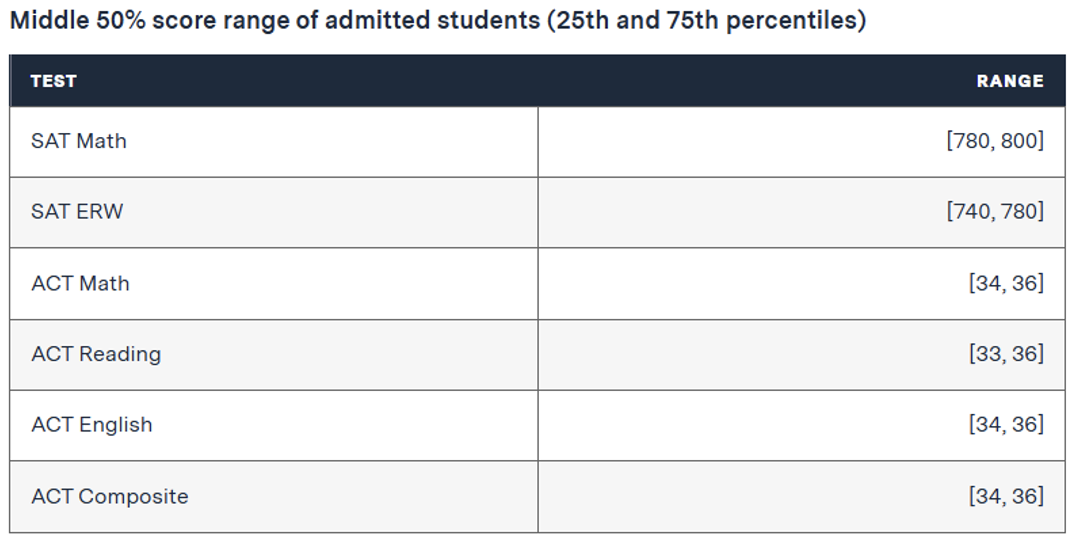
MIT student body is filled with people who were already among the strongest math and science students in their high schools. Their transcripts tend to show near-perfect grades, extremely rigorous coursework, and a consistent pattern of tackling difficult material.
Transfer applicants are evaluated against that same standard. What that means in practice is simple: your freshman-year grades need to be excellent. Not œpretty good.� Not œmostly A.� The closer you can get to a perfect transcript in challenging courses, the better.
Once you start college, academics need to become your top priority. Whether you™re at a flagship public university, a smaller private college, or a community college, the expectation is the same: demonstrate that you can thrive in demanding coursework.
Enroll in the Right Classes
Your course schedule tells admissions officers a lot about your priorities. Ideally, you should be taking classes that both challenge you and align with the academic areas you™re interested in pursuing. If MIT is the goal, that usually means rigorous coursework in math, physics, computer science, engineering, or other technical fields.
At the same time, you™ll want to balance those classes with your college core requirements so that you™re still progressing toward your degree if transferring doesn work out. A lot of the core classes you™ll need might actually overlap with what you want to study!
We also frequently recommend taking more than the standard course load. At many universities, the typical semester includes around 15“16 credits. Taking an additional class or two can demonstrate academic stamina and curiosity, which shows readiness for MIT. Worst case scenario? You realize it too much and drop the class before the add/drop deadline. MIT never needs to know.
Develop Your Extracurriculars
Your extracurricular profile will look a little different as a transfer applicant. When you applied as a high school senior, you were probably trying to fill as many activity slots as possible. Transfer admissions don work quite the same way. Admissions officers care far less about quantity and much more about how you actually spent your time during college.
For MIT especially, extracurriculars should ideally connect to the way you think and the kinds of problems you like to solve. That could mean working in a research lab, contributing to a robotics or engineering team, building independent coding projects, competing in hackathons, or getting involved with technical clubs on campus. Some students launch their own things, anything from tutoring programs to startup ideas to open-source projects. The common thread is curiosity and initiative, because MIT loves students who are actively exploring ideas outside the classroom.
You don need a massive list of activities. What you do need are a few meaningful commitments that demonstrate how you spend your time when you™re not in the library.
Get Involved!
Joining organizations is easy “ every campus has a massive club fair where students sign up for twenty things they never attend again. Actually participating is the part that matters.
Find a few activities that genuinely interest you and commit to them. Some should be academic or technical. Others can just be fun or personal! Both are valuable for your essay.
Getting involved accomplishes two important things. First, it helps you build community at your current school, which is something you™ll appreciate if transferring doesn work out. Second, it creates meaningful experiences you can write about later in your transfer essays.
Also, go to office hours. Please. For us. You™re going to need recommendation letters soon. Professors can write great letters for students they barely know.
Make a Smart List
If your transfer strategy is œapply to MIT and hope for the best,� we should talk. As we™ve covered, MIT admits very few transfer students each year. That doesn mean you shouldn apply “ you absolutely should if it a place that excites you intellectually. We love shooting our shot! But putting all your hopes into one ultra-selective outcome isn a strategy. It wishful thinking.
At TKG, we prefer to build balanced transfer lists. That means including a few ambitious schools like MIT, but also identifying universities where your academic profile and freshman-year accomplishments make you a realistic contender. The goal isn to lower your expectations “ it to give yourself multiple strong outcomes.
Some schools that often make sense on transfer lists include:
Michigan
NYU
Northeastern
Boston University
Notre Dame
Tulane
UNC Chapel Hill
Vanderbilt
Wake Forest
Wesleyan
¶¶ÒõÊÓƵ, Berkeley, and UCSD
One quick note about the UC system: these schools primarily admit junior-year transfers and heavily prioritize California community college students.
Transfer admissions are also notoriously unpredictable. Universities rarely know how many spots they™ll have available until late in the cycle, which means even excellent applicants can be denied simply because space is limited. A thoughtful list gives you multiple ways to win!
Write Great Transfer Essays
The essays are where you gain the most control in the transfer process.
MIT prompts aren trying to trick you. They™re trying to answer a few straightforward questions: why do you want to transfer, what intellectual problems excite you, and why is MIT the right place to pursue them? They also want to figure out your community engagement, how you think, and how you handle pressure. These are all crucial to figure out how you™ll fit in on their campus.
Here are the questions they asked last cycle “ although they could change!
Tell us more about why this field of study at MIT appeals to you. (100 words or fewer)
If you have additional information about your family that you think is important for us to know, please include it here. (100 words, optional)
Briefly describe your reasons for transferring and the objectives you hope to achieve. (Approximately 200 words)
We understand that sometimes things outside of your control impact your ability to complete tests to the best of your ability. If you have an extenuating circumstance, such as exam cancellations or illness, please let us know here. (100 words, optional)
Please discuss why you are considering transferring from your current college or university, and how MIT aligns with your goals. (225 words or fewer)
While some reach their goals following well-trodden paths, others blaze their own trails achieving the unexpected. In what ways have you done something different than what was expected in your educational journey? (225 Words or Fewer)
MIT brings people with diverse backgrounds together to collaborate, from tackling the world biggest challenges to lending a helping hand. Describe one way you have collaborated with others to learn from them, with them, or contribute to your community together. (225 words or fewer)
How did you manage a situation or challenge that you didn expect? What did you learn from it? (225 words or fewer)
Transfer essays are different from first-year essays in one important way. Instead of telling a broad story about your life, you™re explaining why you want to shift. You™re showing how your freshman year clarified your academic interests and why MIT now makes sense as the next step. You need to address what you hoped to explore when you started college, what you actually discovered during freshman year, and why MIT offers opportunities your current school doesn
There also one common mistake you should avoid: criticizing your current institution. Admissions officers don want to read a takedown of another university. Instead, frame your transfer as a search for opportunities “ research programs, academic collaborations, or intellectual environments that align with your goals. And most importantly, be specific. It time to name-drop!
MIT admits students who are excited about ideas. If your essay sounds like it could apply to any elite university, it won be convincing. You need to show exactly how MIT labs, faculty, culture, and approach to problem-solving connect to the work you want to do.
Conclusion
Transferring to MIT is extremely difficult. There no way to sugarcoat that. But difficult and impossible are two very different things!
Every year, a small number of students successfully make the jump. The ones who do tend to share a few key traits: exceptional academic performance, real intellectual curiosity, meaningful extracurricular involvement, and a clear sense of what they want to study and why.
More importantly, following the strategy outlined above does something valuable regardless of the outcome. It ensures that your freshman year is productive, challenging, and full of opportunities. If MIT works out, that incredible. If it doesn, you™ll still have built a strong academic foundation and positioned yourself well for success wherever you are.
Transfer admissions can feel confusing because so much of the process happens behind closed doors. But the preparation part “ the part you control “ is surprisingly straightforward: take hard classes, do well in them, pursue interesting projects, and tell a clear intellectual story. You™ve got this.
Strategizing a transfer to an Ivy League school is challenging, and the transfer process itself can be daunting. Let us help you manage that process “ reach out to us today to get started.